
Quiet Trace: Echo Patterns
It appears. It fades. You remember.
So here's the thing - a pattern shows up on the board for just a second, kinda faint but definitely there.
Then it disappears.
What remains is memory.
Then you've gotta try to draw it back from memory. No cheating, just whatever you can remember.
It’s not about speed.
It’s about clarity.
See How It Works
A Puzzle Built on Disappearance
Patterns appear once. Soft glowing lines briefly define a path across a quiet grid.
Then they fade away completely.
You must reconstruct them from memory. No hints. No replay during tracing.
Only what you perceived remains.

Pattern fades in and out — observe carefully
Observe. Remember. Trace.
-
Step 1

Exposure
The grid lights up briefly. Lines glow and define the path.
-
Step 2

Silence
The board returns to stillness.
-
Step 3

Reconstruction
You draw the pattern back into existence.
Not Every Memory Is Perfect
As levels progress:
-

Patterns become longer
-

Angles become sharper
-

Lines overlap
-

Some segments shift slightly
Occasionally, the echo distorts — just enough to challenge recall.
Look, we're not trying to be jerks here, but yeah, we'll mess with you a bit as you get better.

How Well You Did
Your trace is compared against the original pattern with precision metrics:
Scoring is based on:
Scoring System
-
Line alignment accuracy
-
Distance from original path
-
Overlap precision
-
Optional completion timing
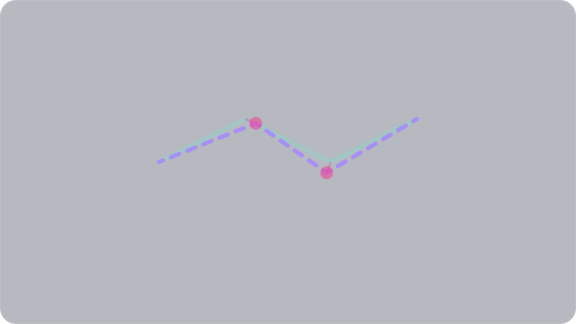
Replay allows you to refine your trace.
Each attempt reveals where memory blurred.
From Simple Shapes to Layered Patterns
Early boards show minimal lines.
Later boards introduce:
-
Intersecting paths
-
Dual-phase memory layers
-
Sequential pattern flashes
-
Multi-board recall
Complexity grows gradually.
Memory strengthens with practice.
Soft. Focused. Minimal.

Fading Visual Design
Lines appear and dissolve
smoothly.

No Harsh Contrast
Muted tones reduce visual strain.

Calm Sound Design
Ambient tones support focus.

Replay for Mastery
Players naturally improve
precision over time.
Visual Gallery




FAQ
-
The early levels are simple and easy to understand. They focus on helping you build memory confidence. As patterns grow more complex, precision becomes more important. It ramps up at a decent pace - not too easy, not brutal.
-
Standard mode allows you to trace at your own pace. Optional challenge modes may include timed reconstruction. The core experience remains calm and reflective.
-
Other memory games are all about how fast you can go. This one's different - it's more about really seeing and remembering the details. It feels less like memorizing and more like remembering.
-
Yes. Replay is encouraged. Many players improve alignment accuracy over multiple attempts. Precision becomes part of the satisfaction.
-
Yes. Controls are simple and intuitive. It's pretty chill to play, and it won't throw you in the deep end right away.
Ready to Trace What Remains?
The pattern will fade.
Your memory will remain.
The board is waiting.
Let`s Begin